TMJ / TMD & Jaw Pain
Jaw pain can be frustrating, confusing, and surprisingly disruptive. If you’re experiencing clicking, popping, headaches, or difficulty chewing, you may be dealing with TMJ/TMD — temporomandibular joint dysfunction.
The good news? Conservative, non-invasive treatment — including physical therapy — is often very effective.
What Is TMJ / TMD?
The temporomandibular joint (TMJ) connects your jaw to your skull. You have one joint on each side of your face, and they work together to allow:
Talking
Chewing
Yawning
Swallowing
Facial movement
When this system becomes irritated, inflamed, or poorly coordinated, it can lead to TMD (temporomandibular disorder).
Common Symptoms of TMJ / TMD
You may be experiencing TMJ dysfunction if you notice:
Jaw pain or soreness
Clicking or popping when opening your mouth
Limited mouth opening
Jaw locking
Headaches or migraines
Ear pain or pressure
Facial pain
Neck pain
Pain with chewing
Teeth clenching or grinding
Many patients are surprised to learn that neck tension and headaches are often connected to jaw dysfunction.
What Causes TMJ/TMD?
TMJ disorders rarely come from just one thing. Most often, it’s a combination of factors:
Jaw clenching or teeth grinding
Stress and muscle tension
Poor posture
Neck dysfunction
Trauma (car accident, fall, sports injury)
Dental changes
Disc irritation inside the joint
Muscle imbalance
Because the jaw, neck, and posture are closely connected, treating only the jaw is often not enough.
How Physical Therapy Helps TMJ / TMD
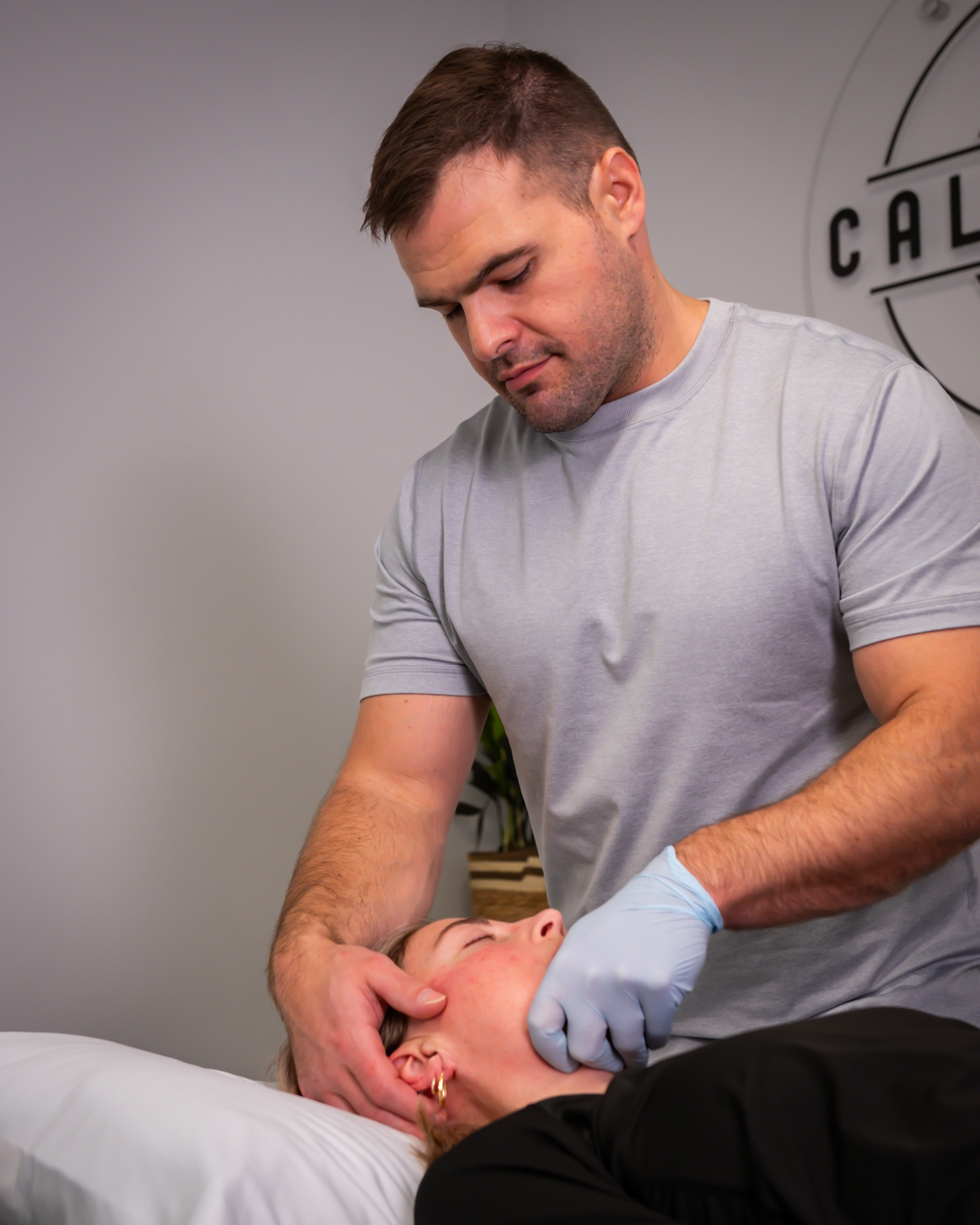
Physical therapy focuses on improving how the jaw, neck, and surrounding muscles work together.
Treatment may include:
Gentle jaw joint mobilization
Soft tissue treatment for tight muscles
Posture correction
Neck treatment
Movement retraining
Relaxation techniques
Home exercise program
Education on clenching habits
This approach addresses the root cause, not just symptoms.
Signs You Should Be Evaluated
Consider an evaluation if:
Your jaw clicks or pops regularly
You wake up with jaw pain
Headaches start in your temples
Your jaw feels tight or fatigued
You avoid certain foods
Your mouth doesn’t open evenly
Your dentist mentioned clenching
Early treatment often leads to faster recovery.
A Collaborative Approach
TMJ care often works best when providers collaborate. Your physical therapist may coordinate with:
Dentists
Oral surgeons
Orthodontists
Physicians
This ensures comprehensive care tailored to your needs.
When to Seek Care
You don’t need to wait until symptoms are severe. TMJ issues often respond best when treated early.
If you’re experiencing jaw pain, headaches, or clicking, an evaluation can help determine what’s contributing and how to improve it.
Get Help for TMJ/TMD & Jaw Pain
At Calibrate Physical Therapy, we provide one-on-one care focused on identifying the underlying causes of jaw pain and restoring normal movement.
Treatment is personalized and designed to help you return to comfortable talking, eating, and daily activities.

Hi, this is a comment.
To get started with moderating, editing, and deleting comments, please visit the Comments screen in the dashboard.
Commenter avatars come from Gravatar.